
Before the Servers Come
Public wealth, sacred land, and what we are being asked to give up

It’s no secret that the proliferation of data centers across the country is accelerating. Now, plans for one have arrived in Box Elder County, Utah, a neighboring county to Cache, where I live.
Apparently, it’s our turn.
I first learned about the proposed project in a Salt Lake Tribune article that left me with a familiar feeling: dread, edged with a kind of weary helplessness. At first glance, it seemed like yet another expression of an economic system that demands endless growth regardless of ecological consequence, regardless of who benefits, regardless of what is quietly devoured in the process.
After my cynicism waned, I let myself dream a little. What if we refused the assumption that prosperity must come at the expense of ecological integrity? What if we insisted on a more honest, more complete conversation? What if we expanded our civic imagination to include a bigger picture?
Some brilliant people I know have already begun that work, assembling a public-facing body of research to widen the frame of this discussion. I’m deeply grateful for that effort, and encourage anyone following this civic moment to take it in. I’m also grateful to my fellow citizens who showed up to the April 27th hearing in such numbers that the county commissioners delayed their vote on the proposal and scheduled another hearing, this time allowing for public comment. What follows in this essay is my own attempt to sit with what they’ve uncovered, to make sense of the dis-ease it’s stirring in me, and to explore any potential cracks that might let in broader understanding.
As often happens, that process has required a reframe.
The first fact about the proposed “Wonder Valley” data center is not its size, though its size is staggering. The first fact is that it is being asked of a place.
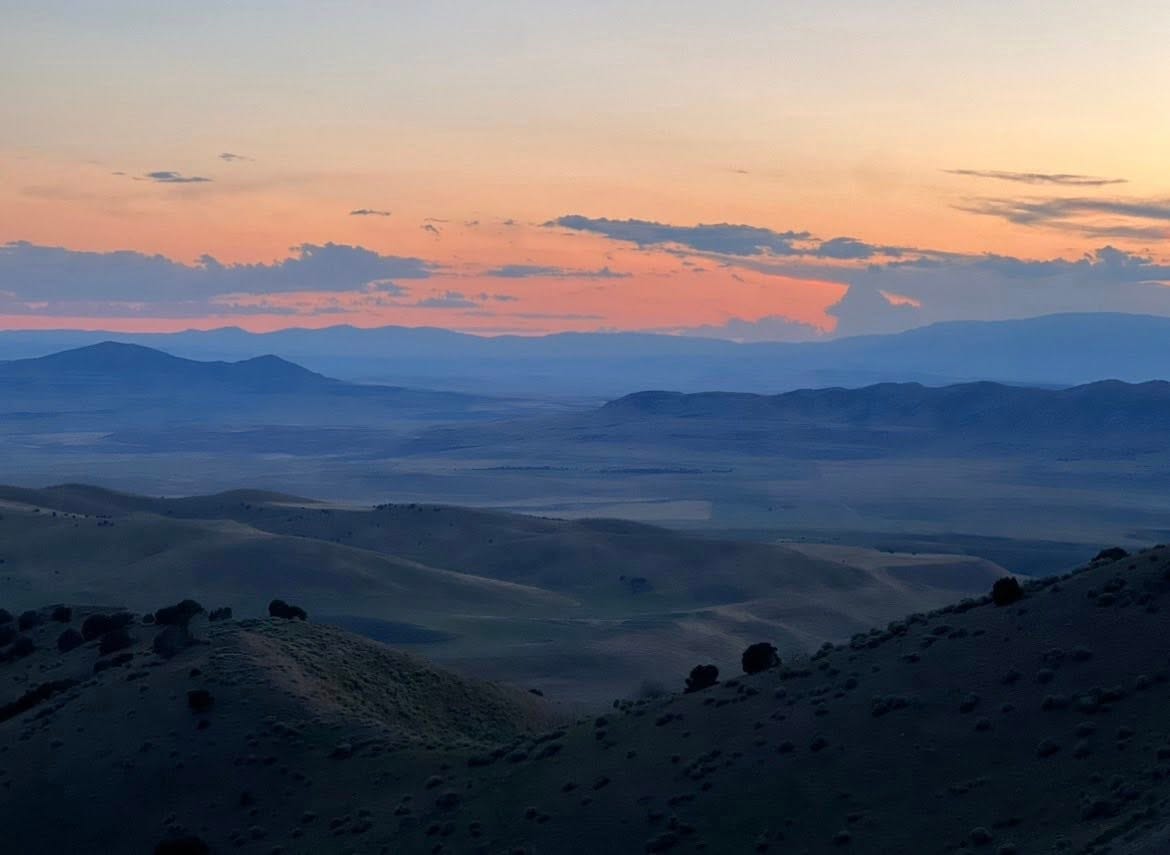
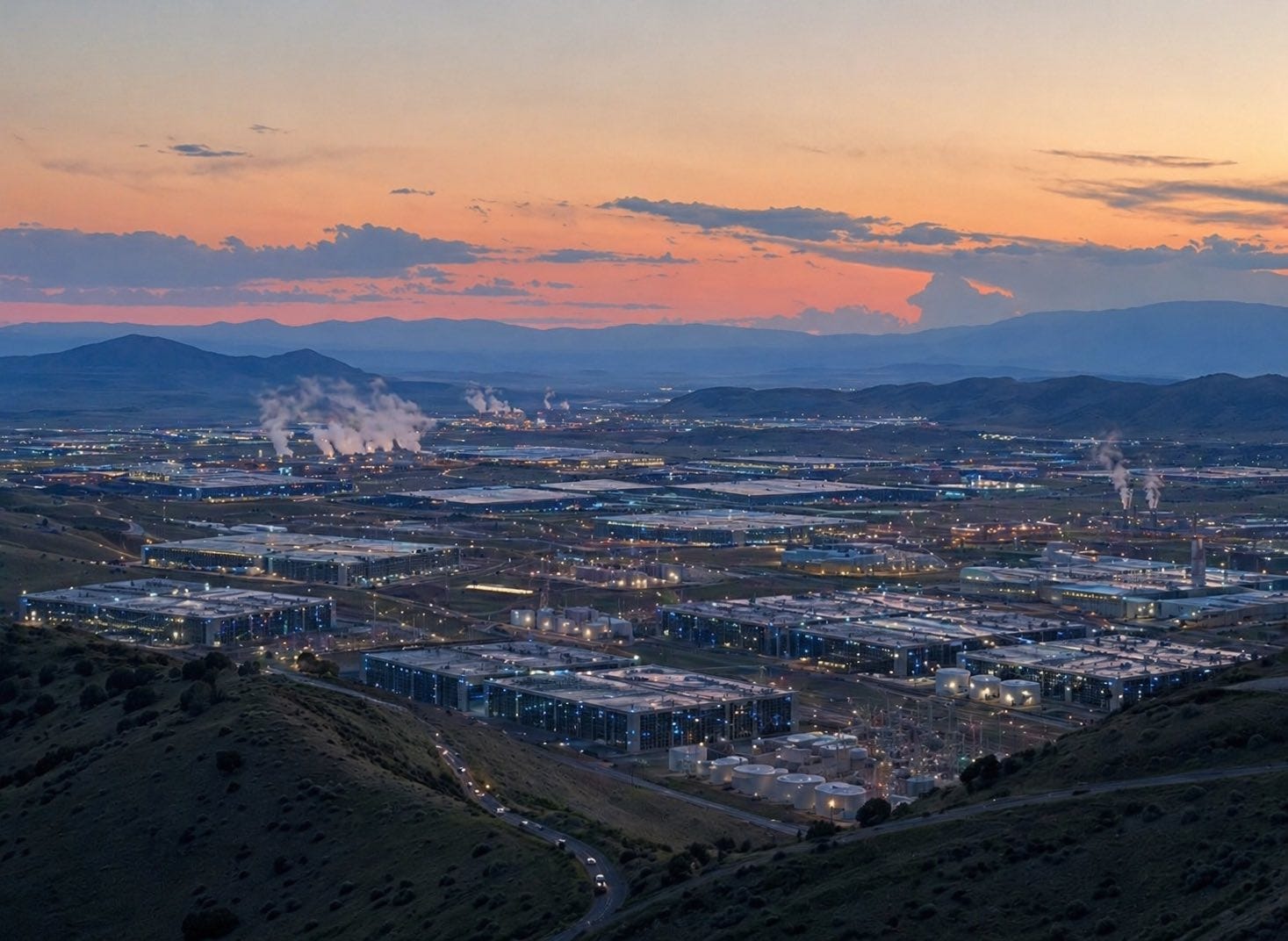
This is not an empty place, nor is it a neutral site on a map. This is a place already holding forms of wealth that do not appear on any balance sheet: groundwater moving slowly beneath Hansel Valley, the diminished but still-living flows of Locomotive Springs, the vast and fragile metabolism of the Great Salt Lake, the migratory patterns of birds returning each year to a landscape increasingly altered beneath them, and the ancestral presence of the Northwestern Band of the Shoshone, for whom this land is relation.
We are accustomed to calling these things “resources,” or, when we are being more careful, “environmental factors.” In the language of development, they become constraints, impacts, and externalities. In other words, conditions to be managed or mitigated.
But what if they are none of those things?
What if they are, instead, forms of public wealth already held in common?
Or, as Robin Wall Kimmerer suggests in her book The Serviceberry, what if we dropped the “re” from “resources” altogether—and recognized them simply as Sources? Sources that are not commodities, but conditions gifted to us. Conditions foundational to life itself.
Public wealth, in this sense, is not limited to tax revenue or infrastructure budgets. It is, profoundly, the set of conditions that make life possible here at all. The aquifer is not an input to an economy; it is a precondition for any economy that might exist. The air shed is not a receptacle for emissions; it is the shared medium through which every resident breathes. The lake is not a scenic amenity; it is a living system whose decline is already reshaping the region’s future.
To call these things “wealth” is not poetic. It is precisely descriptive.
With this in mind, the questions before Box Elder County shift.
This is no longer simply a question of whether to permit a large-scale data center, how to regulate its efficiency, or what level of tax revenue it might generate. It is a question of whether forms of shared, life-sustaining wealth—water, air, land, governance itself—will be converted into private computational infrastructure at an unprecedented scale, under terms that return only a fraction of that value to the public.
To be clear, I’m not interested in casting aspersions, but I am interested in naming clearly how the structure is currently designed to work.
A project of this magnitude depends on a staggering concentration of capital—capital capable of assembling tens of thousands of acres, negotiating bespoke tax arrangements, and building its own energy system. But that capital does not operate in isolation. It depends on access to what it does not own: the aquifer, the atmosphere, the legal authority of the state, the time and attention of local governance, and the stability of a region already under ecological strain.
In that sense, extreme concentrations of private wealth do not exist apart from public wealth. They depend on it. We ignore this at real risk.
And yet the terms of that exchange are rarely described this way. We hear instead of economic development, competitiveness, and urgency. We are told what the project will bring—but far less often what it will quietly and legally take, or what forms of value will be permanently transformed in the process.
The documents1 now before the public make one fact unmistakably clear: there is no existing requirement in Utah law that a project of this kind meet specific standards for total energy efficiency, water use, or overall campus performance. If such standards are not written into the agreements now under consideration, they will not exist.
Which means that the decision facing the County Commission is foundational.
Because once consent is given, much of the leverage to shape those terms disappears. And what has been converted—water into cooling, gas into continuous combustion, land into infrastructure—cannot easily be returned to its prior state.
So the question is not whether this project can be made efficient enough, profitable enough, or technically feasible.
The question is whether the forms of wealth already present here—ecological, cultural, and civic—are being recognized for what they are, and valued accordingly, before they are exchanged for something else.
This is an opportunity to broaden our civic dialogue in good faith.
I hope to see you at the meeting on May 4th.2

This article is activism with no fear, and tears with a punch in the heart. Keep up the fight Rebecca
Rebecca, once again you help us understand what is at stake here in northern Utah. I am very wary of this proposed project for the reasons you mention. The loss of valuable wildlife, lifestyle, ecology, tradition, etc. Additionally, I I understand it will be military data center, which, without sounding paranoid, puts us in added danger for targeting by enemy states. Am I wrong?
On another matter, your violin solo at the AFC concert was phenomenal. Your control and ease with arpeggios ON THE VIOLIN and the harmonics took my breath away. You are much admired as a musician and a thinker/writer. Thank you